September 24, 2026 · Ray Home Goods
How to Mix Art Prints Without Making a Room Feel Busy
A calm approach to combining abstract, graphic, and organic artwork in one considered space.
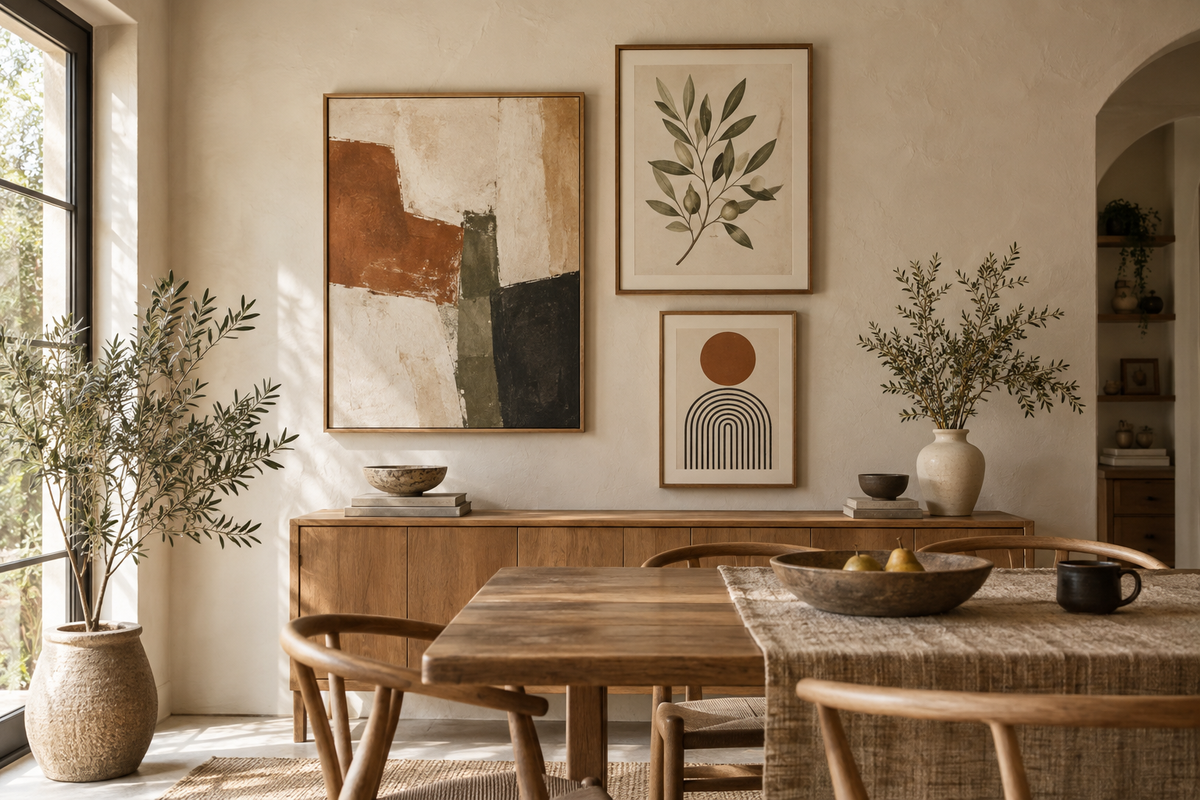
Mixing art styles can make a home feel personal and collected, but too many competing elements can make the room feel unsettled. A few simple constraints allow different prints to live together without losing clarity.
Choose one shared element
Artwork does not need to match, but it should have a reason to belong together. That connection might be a repeated color, similar line quality, related subject matter, or a shared level of contrast. One clear relationship is often enough.
Balance quiet and expressive pieces
If one artwork uses bold color or dense pattern, pair it with something more open. A graphic print can sit beside a soft abstract; a detailed botanical can balance a broad field of color. Contrast works best when each piece has room to contribute.
Repeat colors selectively
Choose two or three tones that appear across the group rather than repeating every color in every print. A warm neutral can connect the art to wood furniture, while a darker accent creates structure and prevents pale compositions from disappearing into the wall.
Vary scale, not everything
A mix of sizes creates movement, but combining many sizes, frame colors, orientations, and visual styles at once can become distracting. Let one element vary while keeping another consistent. For example, use varied art sizes inside matching frames, or mixed frames around artwork with a controlled palette.
Use the room as part of the composition
Consider the sofa, lighting, rugs, and shelving as part of the visual field. If the room already contains strong pattern, choose art with simpler shapes. In a quiet room, one more expressive work can provide energy.
Edit before adding
Leave open wall space around the arrangement and remove pieces that do not support the overall mood. A smaller group of well-related works often feels more intentional than a larger group chosen only to fill space.
The goal is not uniformity. It is a comfortable rhythm—enough variety to feel personal, with enough repetition to let the room rest.